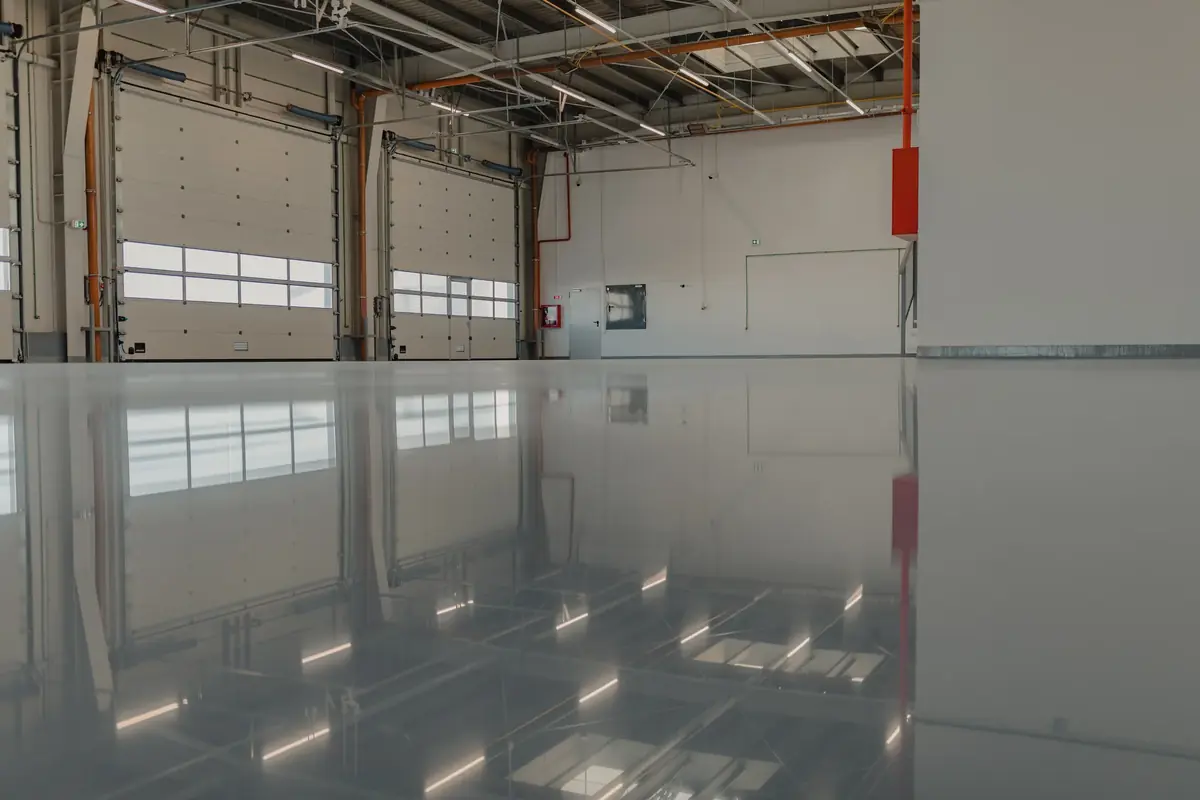
High-gloss gray epoxy floor in an empty commercial building with overhead doors

SYS-01Core system

Commercial Epoxy Flooring in Phoenix, AZ

A commercial floor has to keep working while your business does. We assess the slab, prepare it properly and install a resin system matched to your traffic, cleaning routine and schedule.

Commercial estimates

Request a Commercial Estimate

Tell us about your facility and floor. We’ll follow up to discuss next steps.

A rough estimate is fine.

By submitting, you agree to be contacted about your project. See our privacy policy. Have photos? Use the full estimate form.

Overview

What commercial epoxy flooring involves

Commercial epoxy flooring is a family of thermosetting resin coatings bonded to a concrete slab. Once cured, the system forms a continuous surface without grout lines or seams, which makes it easier to clean and gives the space a finished, deliberate look. The term covers a wide range of systems, from thin protective coats to thicker, multi-layer builds with decorative broadcast or slip-resistant aggregate.

The material is only half of the result. Most coating problems trace back to the concrete underneath or the way it was prepared, so a commercial project starts with the slab: its condition, its moisture behavior, existing coatings or sealers, and the joints and cracks that need treatment before anything is applied.

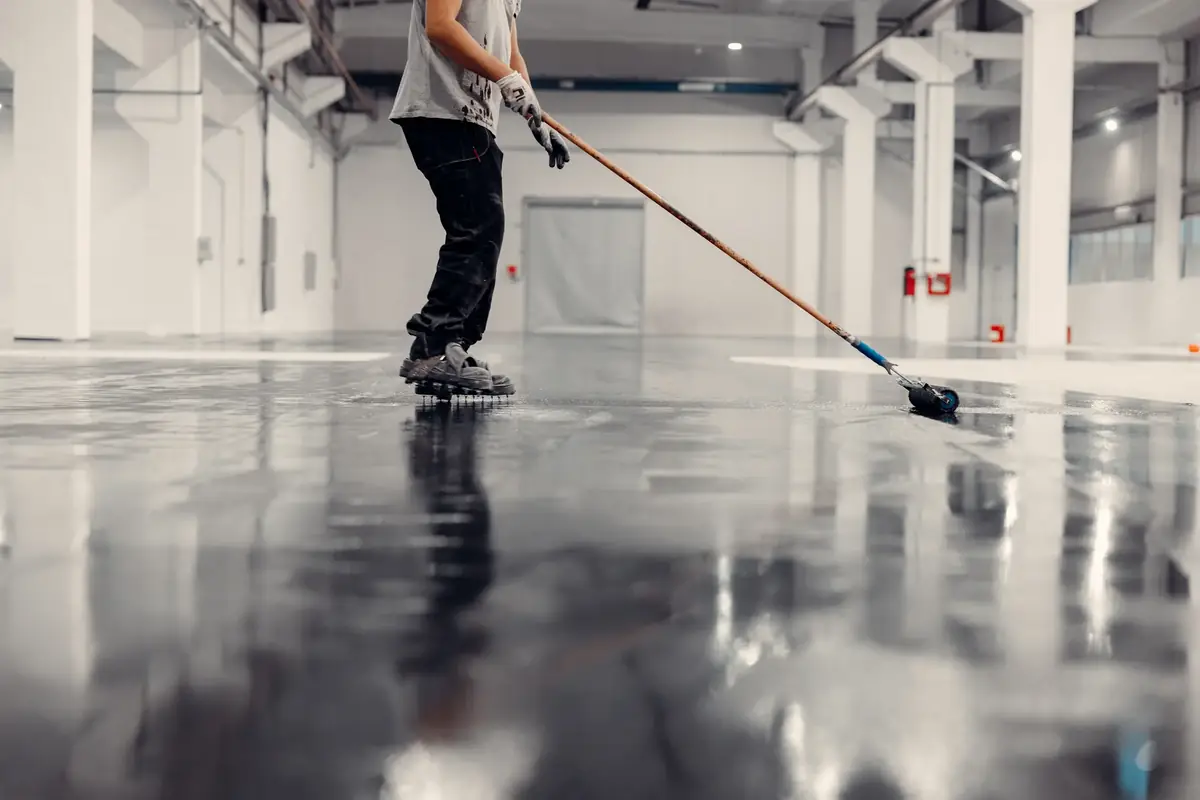
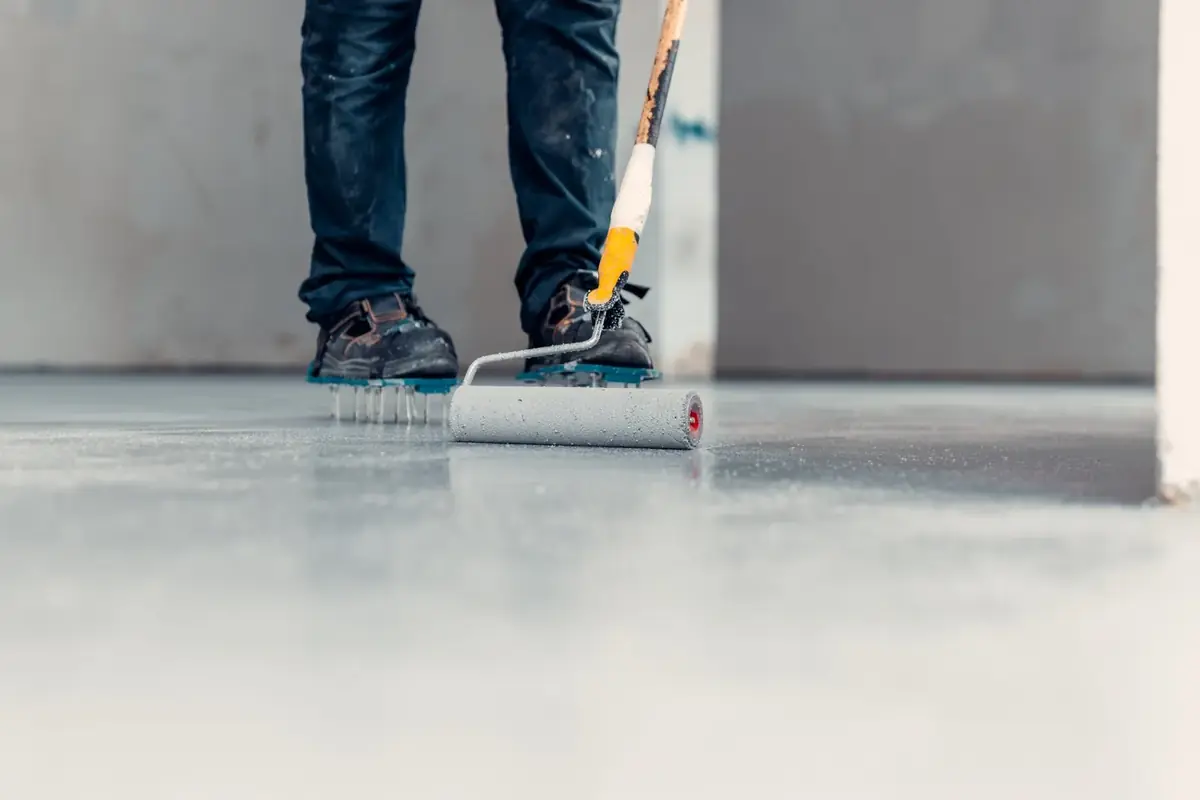
Installer rolling primer onto a prepared concrete floor

01Concrete substrate assessment

Before recommending a system, the floor is walked and evaluated. That means looking at surface hardness, previous coatings, sealers or curing compounds, oil and chemical contamination, cracks, spalls, control joints and slope or drainage requirements. Where the slab sits on grade, moisture vapor emission is considered because excess vapor drive is a common cause of blistering and delamination in resin floors.

The assessment determines what preparation is needed, whether testing is advisable, and which coating systems are realistic for the space. Some floors are ready for a straightforward coating; others need repair, moisture mitigation or removal of an old system first.

02Surface preparation

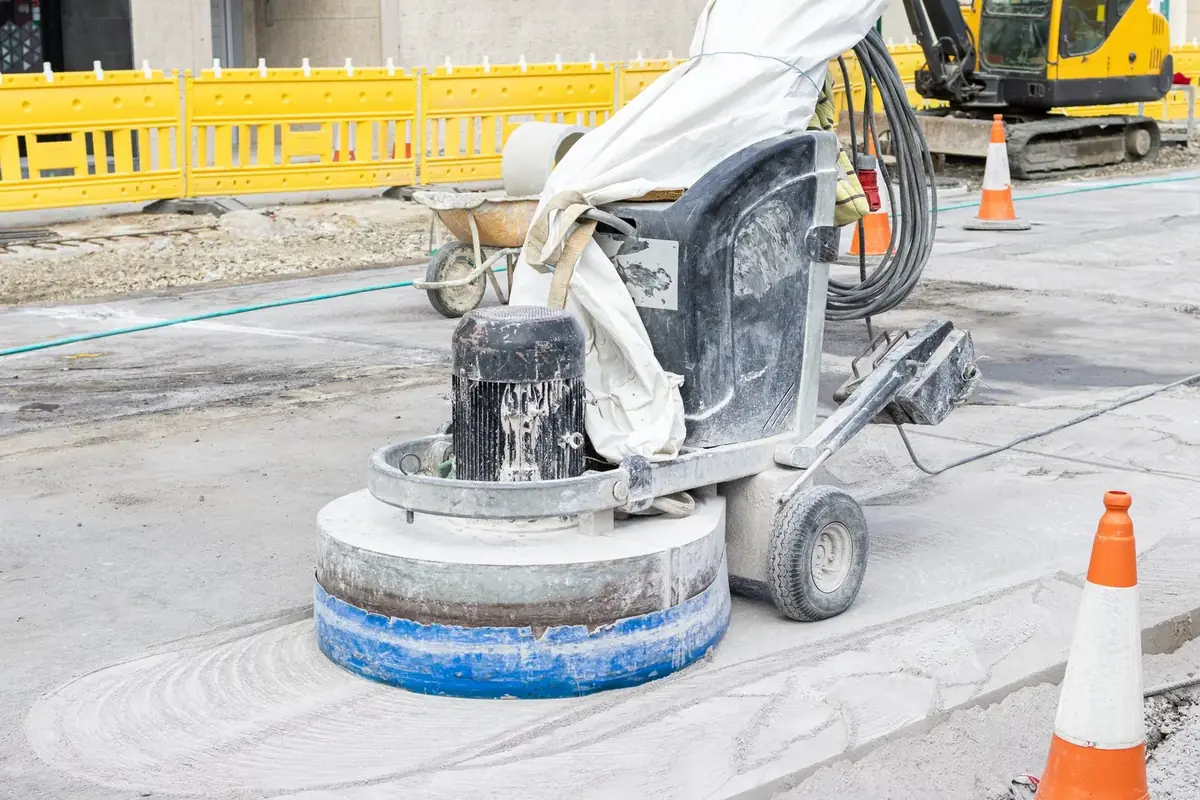
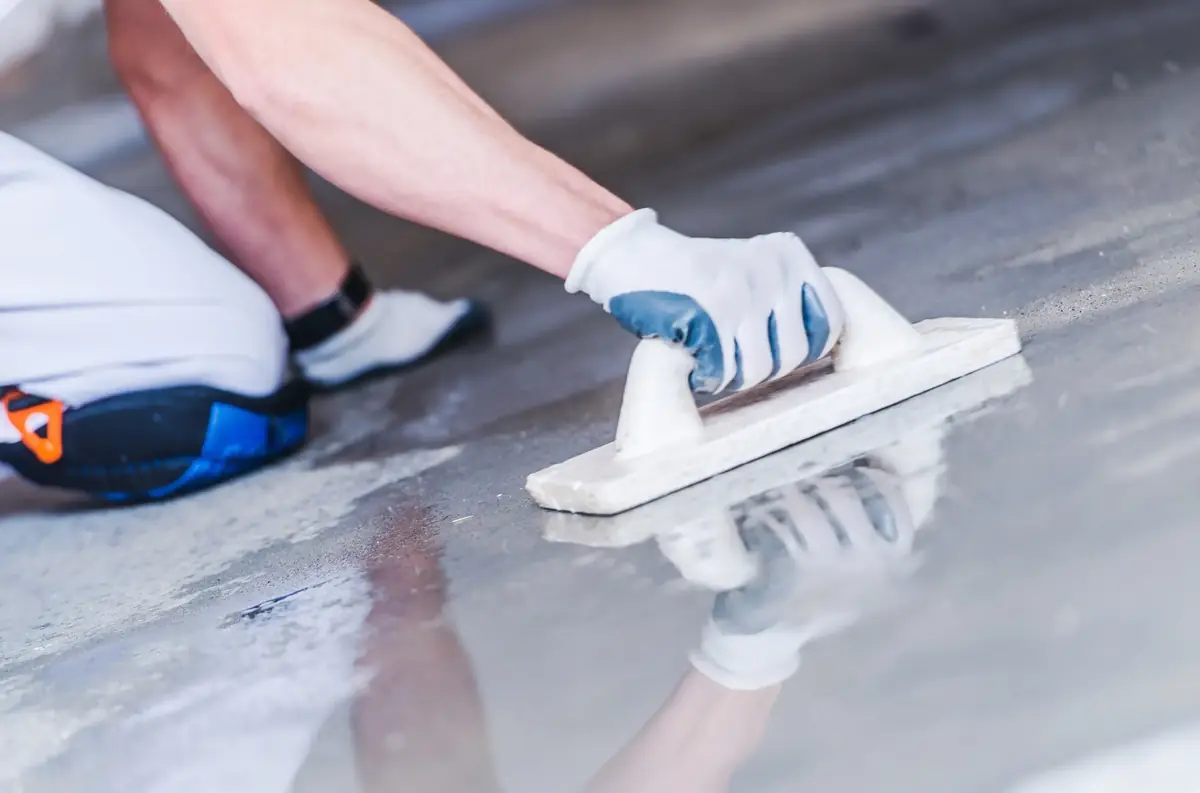
Epoxy needs a clean, sound and profiled surface to bond to. Commercial preparation is typically done by diamond grinding or shot blasting to remove the weak top layer of concrete (laitance), open the pores and create a consistent surface profile. Contaminants such as oils, sealers and old coatings have to be removed rather than covered over.

Dust is controlled with vacuum-equipped equipment, which matters in occupied buildings and in spaces with sensitive inventory or equipment nearby.

03Crack and defect treatment

Cracks, divots and spalled areas are filled with repair materials compatible with the coating system. Control joints are handled based on how the slab moves: some joints are filled, others are honored through the coating so the floor can move without cracking the finish. Cracks that are actively moving can reflect through a coating, and that is discussed honestly during planning.

04Primer and coating application

A penetrating primer is usually applied first to wet out the concrete and anchor the system. Body coats follow, applied by squeegee and roller to the specified thickness. Depending on the system, decorative flake, quartz or slip-resistant aggregate may be broadcast into a wet coat. A topcoat, which can be epoxy, polyurethane or polyaspartic depending on the requirement, finishes the system and sets the gloss level and wear characteristics.

05Finish selection

Finish choices include solid colors, decorative flake blends, quartz-filled textures and metallic effects, with gloss, satin or textured surfaces. In working areas, the right finish balances appearance with slip resistance, cleanability and how visible wear or tire marks will be over time.

06Curing and return to service

Every resin system has its own cure schedule, and temperature has a large effect on it. Light foot traffic is often possible before vehicles, equipment or heavy rolling loads are allowed back. The schedule for your project is based on the manufacturer’s data for the specific products used and the conditions on site, and it is planned around your operations from the start.
Suitable applications

Where this system is commonly used

  • Office buildings and corridors
  • Back-of-house and service areas
  • Retail and customer-facing spaces
  • Light industrial and flex buildings
  • Storage rooms and mechanical rooms
  • Automotive service and fleet areas
  • Gyms, studios and multi-use spaces
  • Lobbies and entryways (with suitable finishes)

Common flooring problems

Issues this work addresses

Dusting bare concrete

Unsealed concrete sheds fine dust that gets tracked onto inventory, equipment and finished spaces.

Stains that never come out

Oils, fluids and spills soak into porous concrete and leave permanent marks.

Failing old coatings

Thin paint-type coatings peel under traffic, leaving a patchy floor that is hard to clean.

Dark, dull spaces

Gray concrete absorbs light, which can make work areas feel dim and worn.

Installation & preparation process

How the project runs

Steps and timing vary with slab condition, the system selected and site temperature. This is the typical sequence.

  1. 01

    Walkthrough & assessment

    Slab condition, existing coatings, moisture considerations, joints and operational needs are reviewed.

  2. 02

    System recommendation

    A coating system, finish and thickness are proposed for how the space is used.

  3. 03

    Schedule planning

    Work areas, phasing, access and return-to-service timing are coordinated with your team.

  4. 04

    Preparation & repair

    Grinding or blasting, contaminant removal, crack and joint treatment.

  5. 05

    Installation

    Primer, body coats, any broadcast media and topcoat are applied to specification.

  6. 06

    Cure & handover

    The floor cures per manufacturer guidance, followed by a walkthrough and care guidance.

Coating systems & finish options

Systems to consider

Final selection depends on the substrate, exposures and how the space is used. Availability of specific systems is confirmed during your estimate.

SYS-01.1

Solid-color epoxy

A clean, uniform look for working areas, available in a range of colors and gloss levels.

SYS-01.2

High-build epoxy

Thicker applications for areas that see more wear and need more film thickness.

SYS-01.3

Decorative flake

Broadcast vinyl flakes that add texture and help disguise everyday dirt and wear.

SYS-01.4

Polyurethane or polyaspartic topcoats

Topcoats chosen when UV stability, abrasion resistance or faster turnaround is a priority.

Practical benefits

What a well-specified floor delivers

Seamless and cleanable

A continuous surface without grout lines is simpler to sweep, scrub and maintain.

Brighter work areas

Lighter colors and gloss finishes reflect more light back into the space.

Protects the slab

A bonded coating helps keep spills and dust from the concrete surface.

Professional appearance

A finished floor signals a well-run facility to customers, staff and inspectors.

Before & after

See the difference a finished floor makes

Drag the handle, or focus it and use the arrow keys, to compare. Genuine project comparisons will be added as they become available.

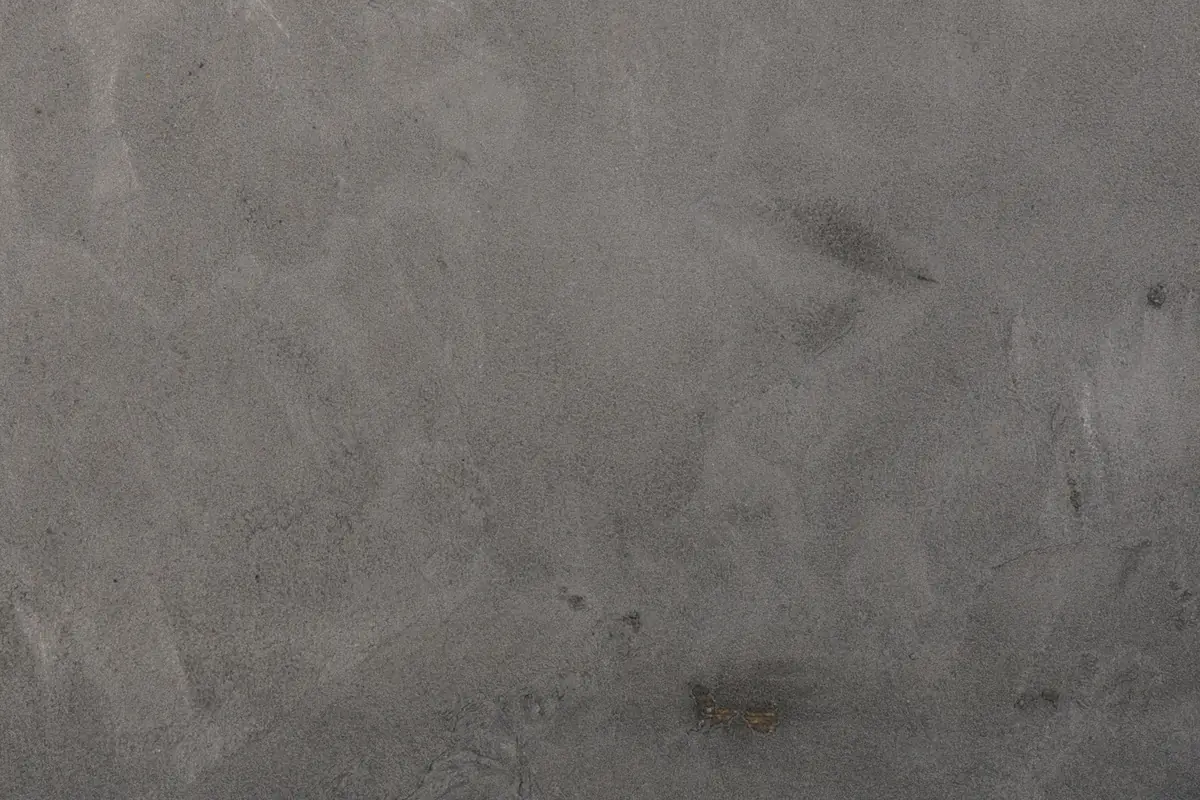
Worn, stained bare concrete floor surface Smooth, glossy gray coated concrete floor Before After
Illustrative comparison using stock photography: uncoated concrete versus a gloss resin finish. Not a company project.
Sonoran Desert mountains and scrub under a dramatic sky near Phoenix

Phoenix, Arizona

Commercial floors in the Phoenix climate

In Phoenix, heat shapes how a coating project is planned. Resin cure speed and working time change with temperature, and slab temperatures in unconditioned buildings can climb well above air temperature through the summer. Installations in hot months are often scheduled for cooler parts of the day or for spaces where the HVAC is running, so the material can be applied within the manufacturer’s recommended range.

Fine desert dust tracked in from parking lots and dock doors also acts as an abrasive on any floor finish. Entry matting, a routine cleaning schedule and a topcoat chosen for abrasion resistance all help a commercial floor keep its appearance in a Valley environment.

FAQ

Commercial Epoxy Flooring questions

Ask about your project
How long does a commercial epoxy floor installation take?

It depends on the floor area, the amount of preparation and repair, the system selected and its cure schedule. Small areas may be completed within a few days, while larger or phased projects take longer. A project-specific schedule is provided after the assessment.

Can you work around our business hours?

Phasing, after-hours and weekend work can often be arranged, subject to site access and the cure times of the products used. These details are discussed during planning so downtime is predictable.

Will epoxy hide cracks in our concrete?

Cracks are repaired before coating, but cracks that are still moving can reappear through any rigid coating over time. The assessment identifies these areas so expectations are clear.

Is there an odor during installation?

Some resin products have noticeable odor during application. Low-odor options and ventilation planning can be discussed for occupied buildings.

How do we maintain the floor?

Routine dust mopping and cleaning with a neutral cleaner suited to resin floors is usually enough. Specific guidance depends on the system installed and is provided at handover.

Commercial estimates

Planning commercial epoxy flooring in Phoenix?

Share your facility type, square footage and timeline. We’ll review the details and follow up to discuss an assessment and estimate.

Request a Commercial Estimate

Request a Commercial Estimate

A rough estimate is fine.

JPG, PNG, WebP or HEIC · up to 10 MB total.

By submitting, you agree to be contacted about your project. See our privacy policy.