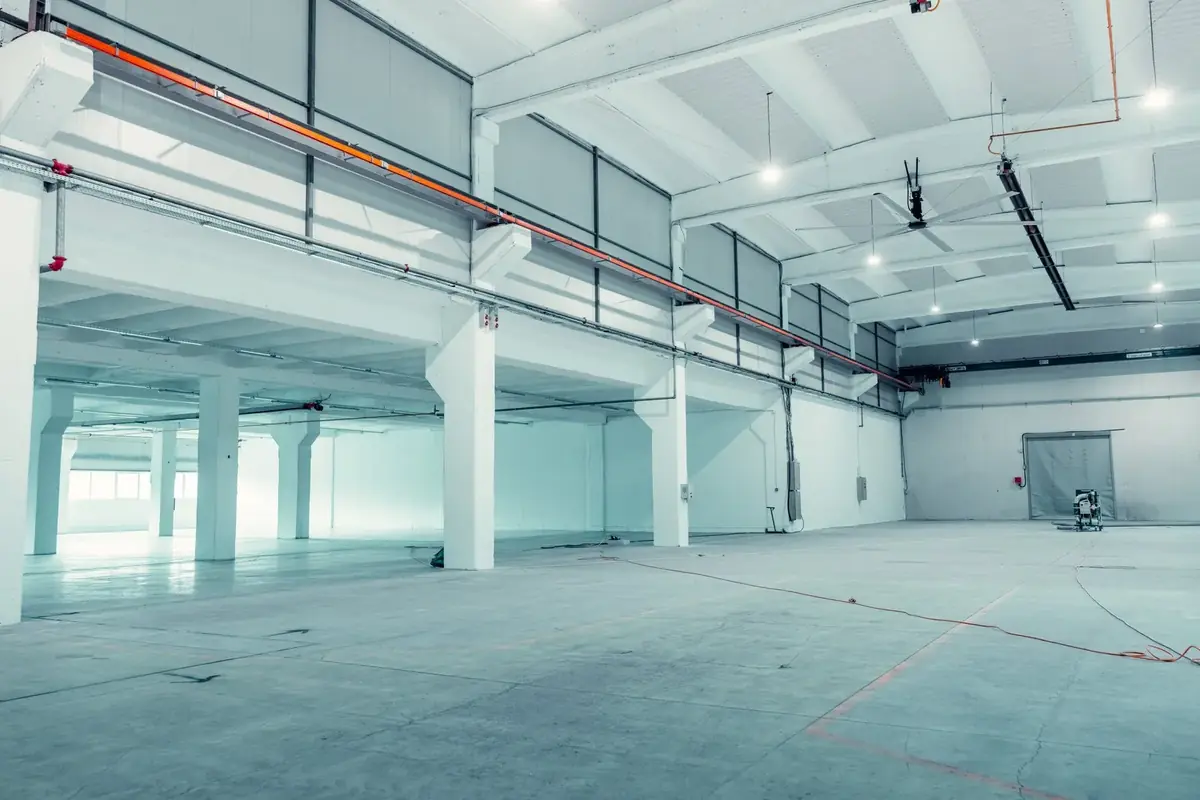
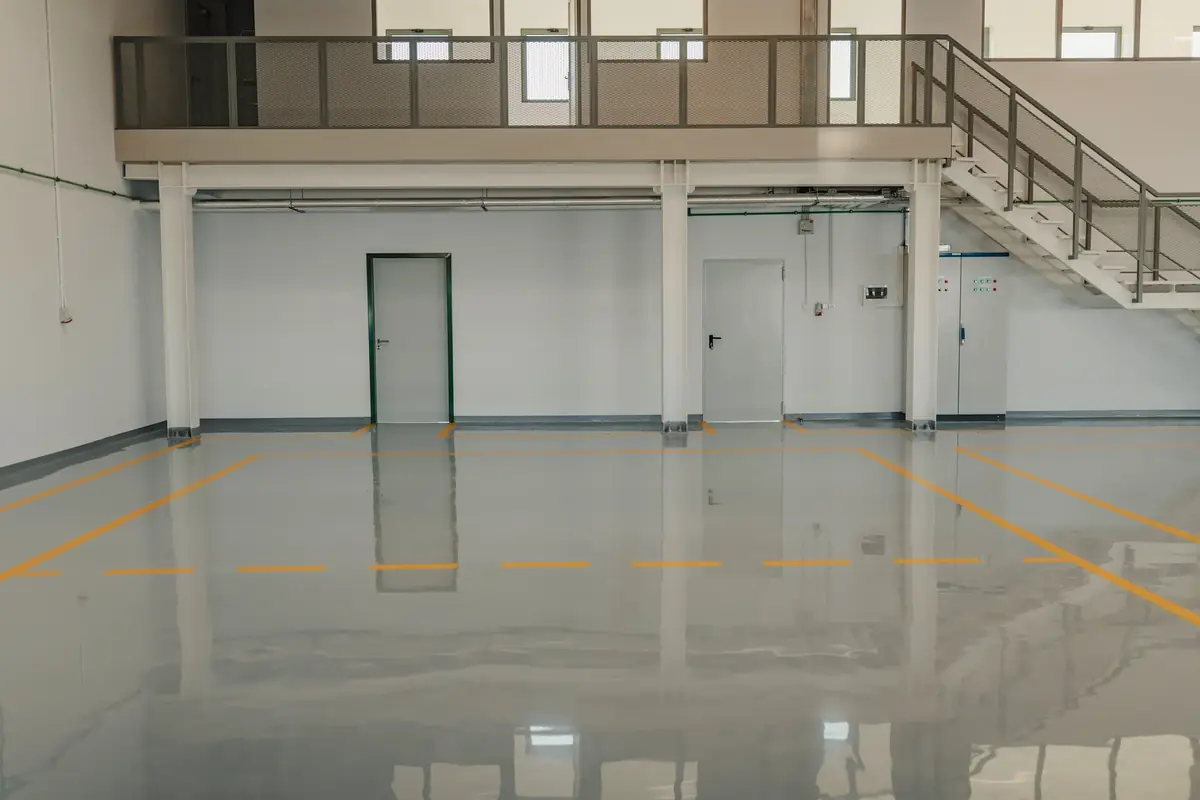
Industrial building floor with glossy gray coating and yellow safety lines

SYS-02Heavy-duty system

Industrial Epoxy Flooring for Phoenix Facilities

Industrial floors take impacts, rolling loads, cleaning chemicals and constant traffic. The right system starts with a clear picture of what actually happens on your floor every shift.

Commercial estimates

Request a Commercial Estimate

Tell us about your facility and floor. We’ll follow up to discuss next steps.

A rough estimate is fine.

By submitting, you agree to be contacted about your project. See our privacy policy. Have photos? Use the full estimate form.

Overview

What industrial epoxy flooring involves

Industrial epoxy flooring is less about appearance and more about how a floor holds up under operations. Forklifts, pallet jacks, carts, dropped tools, process spills and aggressive cleaning all wear on a surface in different ways. A floor system that suits a light assembly area can be the wrong choice next to a wash-down zone or a loading dock.

Because industrial requirements vary so widely, there is no single "industrial epoxy." Selection involves film thickness, resin chemistry, aggregate, topcoat and the condition of the slab, matched to the real exposures in each area of the facility.

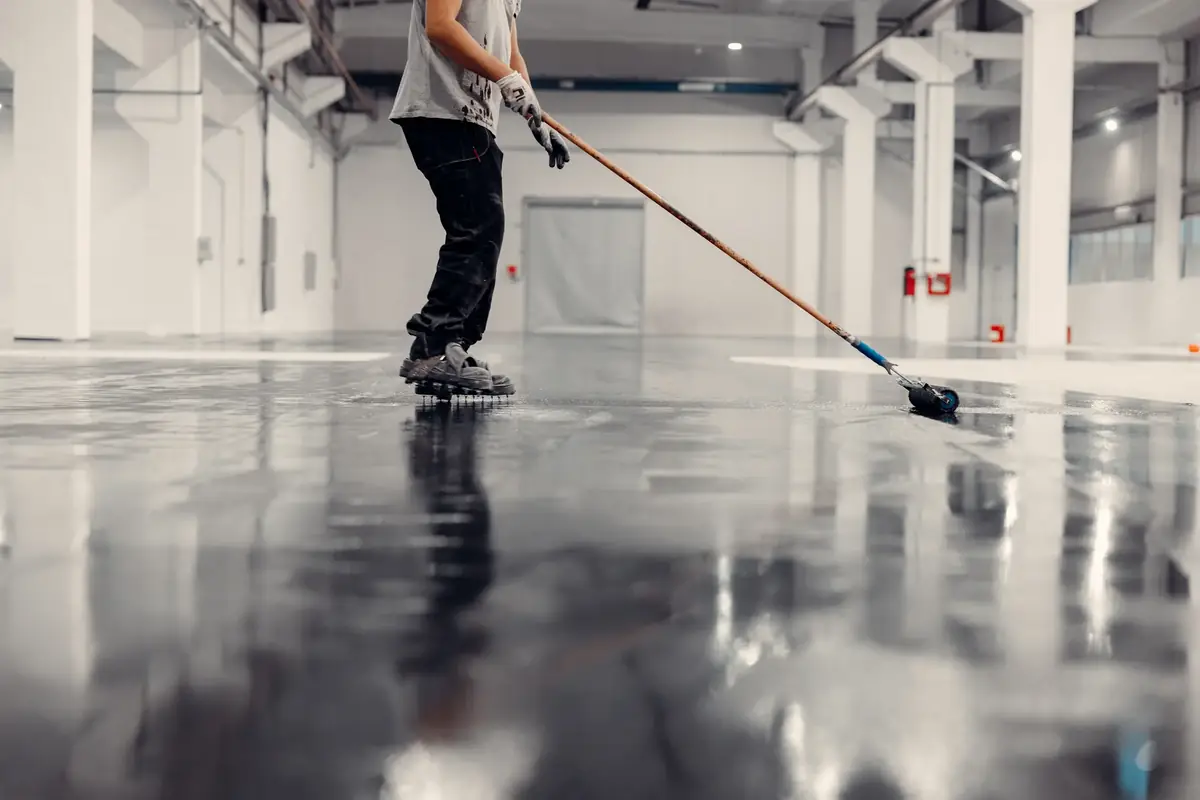
Worker applying a coating across a large industrial floor with a long-handled roller

01Understanding operational demands

Planning begins with how each zone is used: the type and frequency of vehicle traffic, point loads from racking or machinery, impact risk, temperature exposure and how the floor is cleaned. Many facilities end up with more than one system, for example a high-build coating in production aisles and a different topcoat or texture in wet areas.

02Surface durability and film thickness

Thicker, higher-solids systems generally tolerate abrasion and impact better than thin coatings. Options range from multi-coat high-build epoxy to aggregate-filled systems and, where appropriate, trowel-applied mortars. The right build depends on what the floor needs to withstand, not on a one-size specification.

03Chemical exposure

Resin systems differ in how they respond to specific chemicals, concentrations, temperatures and contact times. When a floor will see process chemicals, cleaners or fluids, the exposure list is reviewed against manufacturer resistance data for the products under consideration. No coating resists every substance, and some environments are better served by a different chemistry entirely, such as novolac epoxy or urethane cement. Those trade-offs are explained before a system is chosen.

04Maintenance requirements

An industrial floor performs best when it is cleaned with methods and products compatible with the coating. Auto-scrubbers, degreasers and pressure washing are all common, and some topcoats tolerate them better than others. Knowing your cleaning routine up front helps avoid a finish that dulls or softens prematurely.

05Traffic exposure and safety markings

Industrial floors often carry aisle striping, pedestrian walkways, hazard zones and equipment outlines. Line markings can be integrated into the coating system for a cleaner, longer-lasting result than surface paint or tape. Texture can be added in areas where wet or oily conditions make slip resistance a priority.
Suitable applications

Where this system is commonly used

  • Production and assembly floors
  • Machine shops and fabrication areas
  • Maintenance and repair bays
  • Loading docks and staging areas
  • Plant corridors and pedestrian aisles
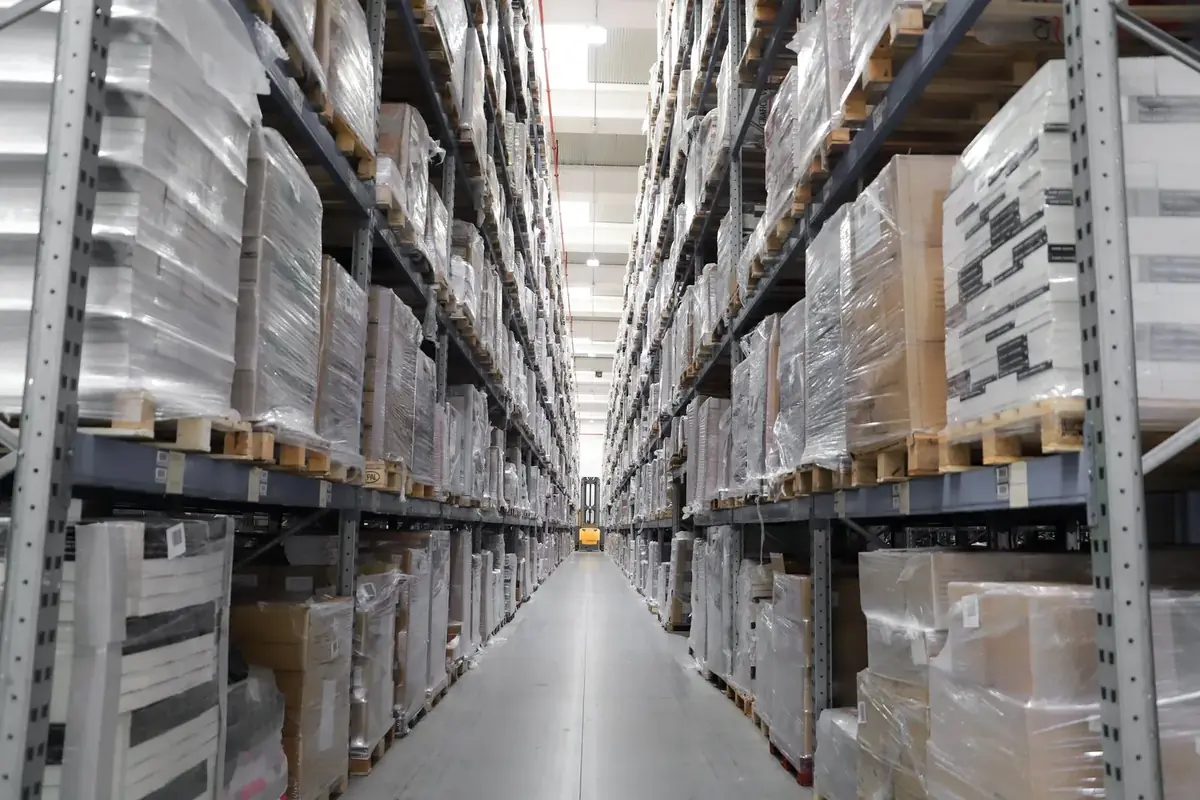
  • Packaging and fulfillment lines
  • Battery charging and equipment rooms
  • Utility and mechanical spaces

Common flooring problems

Issues this work addresses

Worn traffic lanes

Forklift and cart routes wear through thin coatings, exposing bare concrete in predictable paths.

Impact damage

Dropped parts and tools chip coatings and spall weak concrete edges.

Spills that soak in

Fluids penetrate unprotected concrete, creating staining and potential slip hazards.

Faded floor markings

Painted lines and tape wear off, leaving aisles and safety zones poorly defined.

Installation & preparation process

How the project runs

Steps and timing vary with slab condition, the system selected and site temperature. This is the typical sequence.

  1. 01

    Zone-by-zone survey

    Each area is reviewed for traffic, loads, chemicals, cleaning and temperature exposure.

  2. 02

    System specification

    Resin chemistry, thickness, aggregate and topcoat are selected per zone.

  3. 03

    Shutdown planning

    Work is sequenced around production schedules, holidays or planned shutdowns.

  4. 04

    Mechanical preparation

    Grinding or shot blasting, contamination removal and concrete repairs.

  5. 05

    System installation

    Primer, build coats, broadcast media, line markings and topcoat.

  6. 06

    Cure & return to service

    Equipment returns on a cure schedule based on the products and site conditions.

Coating systems & finish options

Systems to consider

Final selection depends on the substrate, exposures and how the space is used. Availability of specific systems is confirmed during your estimate.

SYS-02.1

High-build epoxy

Multi-coat systems that add film thickness for abrasion and traffic resistance.

SYS-02.2

Quartz or aggregate-filled systems

Broadcast aggregate adds texture and body for heavier wear areas.

SYS-02.3

Chemical-resistant chemistries

Options such as novolac epoxy where specific chemical exposure has been identified and confirmed.

SYS-02.4

Integrated safety markings

Aisle lines, walkways and hazard zones coated into the system.

Practical benefits

What a well-specified floor delivers

Defined, durable work zones

Coated markings and color coding help organize traffic and workflow.

Easier spill cleanup

A sealed surface keeps many fluids on top of the floor where they can be cleaned.

Reduced concrete dust

Coated concrete doesn’t shed dust onto equipment and product.

System matched to exposure

Specifying per zone avoids over-building some areas and under-building others.

Before & after

See the difference a finished floor makes

Drag the handle, or focus it and use the arrow keys, to compare. Genuine project comparisons will be added as they become available.

Uncoated, stained concrete slab Dark gray reflective coated industrial floor Before After
Illustrative comparison using stock photography: bare slab versus a coated industrial floor. Not a company project.
Aerial view of Phoenix and Camelback Mountain at sunrise

Phoenix, Arizona

Industrial facilities across the Valley

The Phoenix metro area has a large and growing industrial base, including manufacturing, logistics and semiconductor supply chains in the East and West Valley. Many of these buildings are large tilt-up structures where floors are exposed to extreme heat near dock doors and in areas without full climate control.

Large open doors also bring in sunlight and dust. Standard epoxies can amber or chalk with UV exposure, so floors near openings may call for a UV-stable topcoat. Heat affects working time during installation, which is why industrial projects in Phoenix are often scheduled around cooler hours or seasons when possible.

FAQ

Industrial Epoxy Flooring questions

Ask about your project
Is epoxy strong enough for forklift traffic?

Properly specified and installed resin systems are commonly used in forklift areas. Durability depends on the system thickness, the concrete, wheel types, loads and maintenance. Specific performance is never assumed without reviewing the product data for your conditions.

Can the floor resist the chemicals we use?

It depends on the exact chemicals, concentration, temperature and contact time. Share your chemical list and the coating options will be checked against manufacturer resistance data. Some environments need a different chemistry than standard epoxy.

Can you install during a plant shutdown?

Yes, shutdown and holiday windows are often the best opportunity for industrial floor work. Planning ahead lets preparation, installation and cure fit within the window.

Can safety lines be added to an existing coated floor?

Often, yes, provided the existing coating is well bonded and compatible. The surface is prepared and lines are applied using a compatible coating product.

What happens to joints in the slab?

Joints are evaluated individually. Some are filled with a semi-rigid joint filler to protect edges from wheel traffic; expansion or moving joints are generally honored through the coating.

Commercial estimates

Planning industrial epoxy flooring in Phoenix?

Share your facility type, square footage and timeline. We’ll review the details and follow up to discuss an assessment and estimate.

Request a Commercial Estimate

Request a Commercial Estimate

A rough estimate is fine.

JPG, PNG, WebP or HEIC · up to 10 MB total.

By submitting, you agree to be contacted about your project. See our privacy policy.