01Epoxy
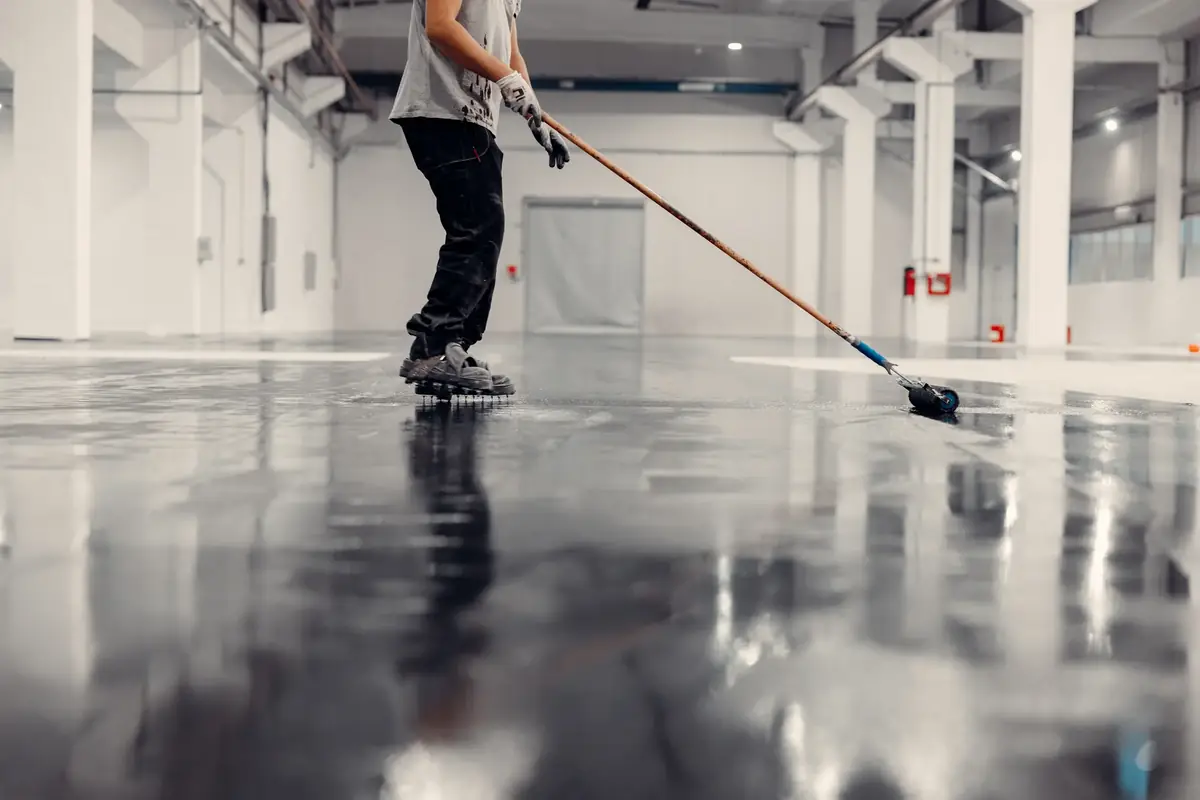
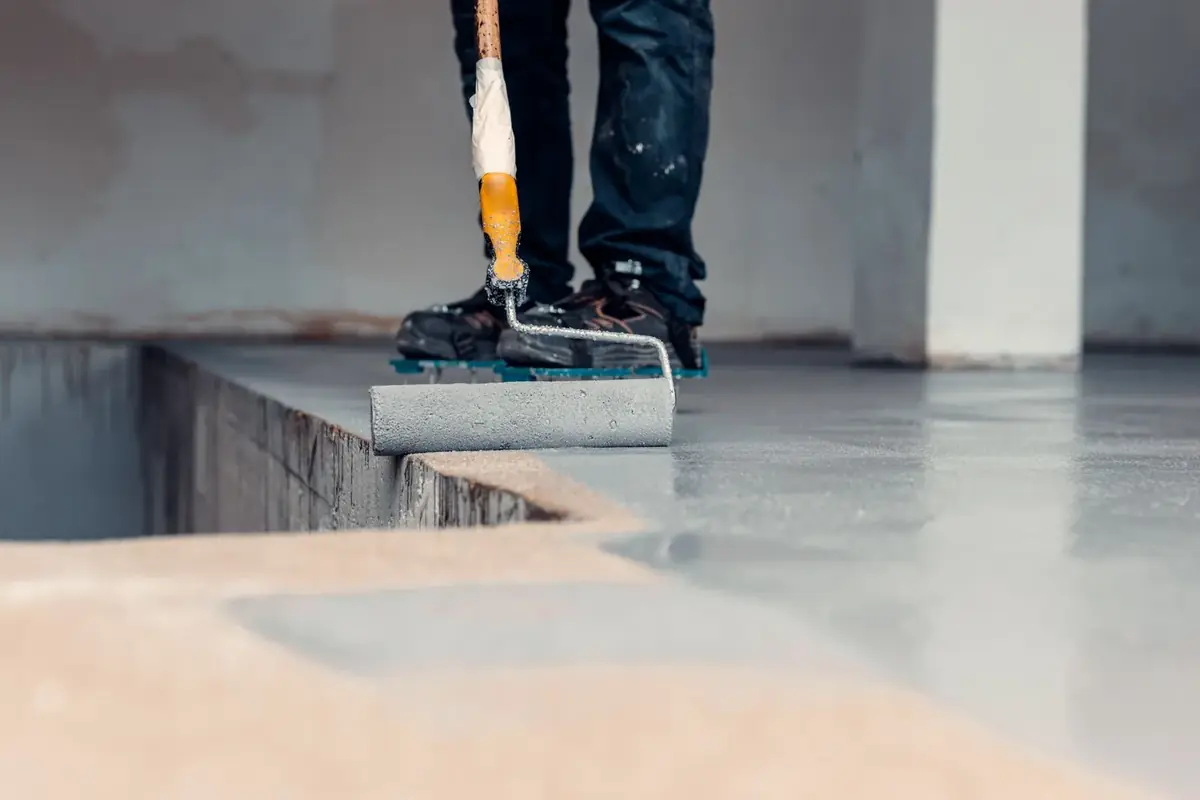
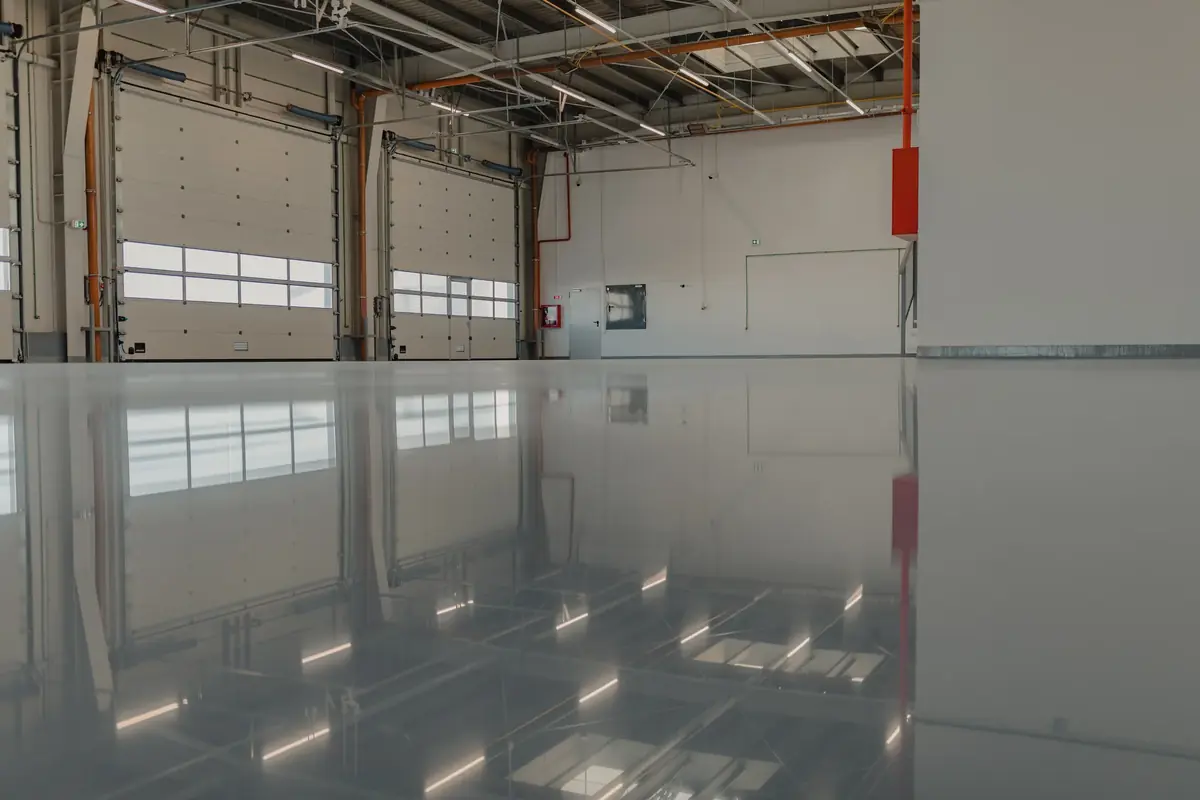
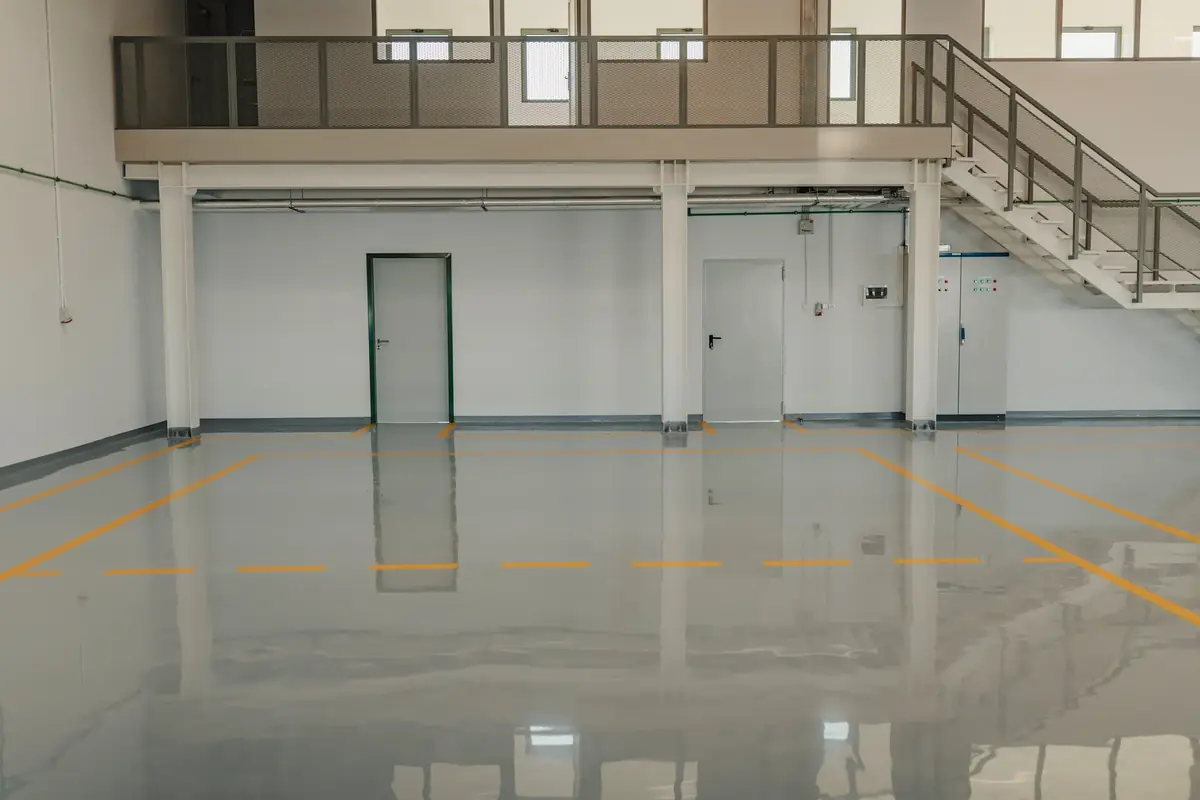
Epoxy is the most common base for commercial resin floors. It bonds well to properly prepared concrete, builds thickness efficiently and offers good hardness and chemical resistance for many environments. Standard epoxies can yellow or chalk when exposed to UV light, so they are often paired with a different topcoat in sunlit areas.
02Polyurethane topcoats
Aliphatic polyurethanes are frequently used as topcoats over epoxy. They tend to offer better UV stability and scratch and abrasion resistance than epoxy alone, and are available in a range of gloss levels. They are applied thin, so they are a wear layer rather than a build layer.
03Polyaspartic coatings
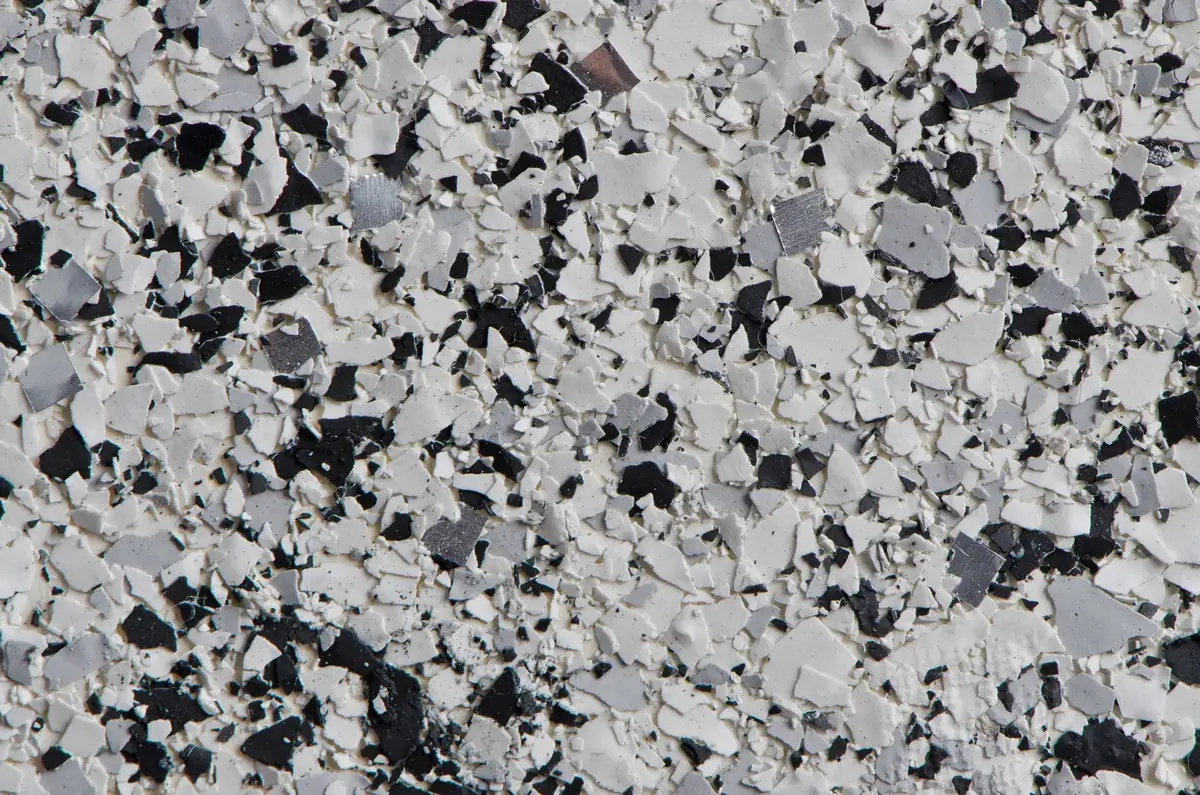
Polyaspartics are a type of polyurea with fast cure characteristics and good UV stability. Faster cure can shorten downtime, but it also shortens working time, which requires experienced installers, especially in hot conditions. They are often used as topcoats over flake or epoxy base coats.
04Urethane cement
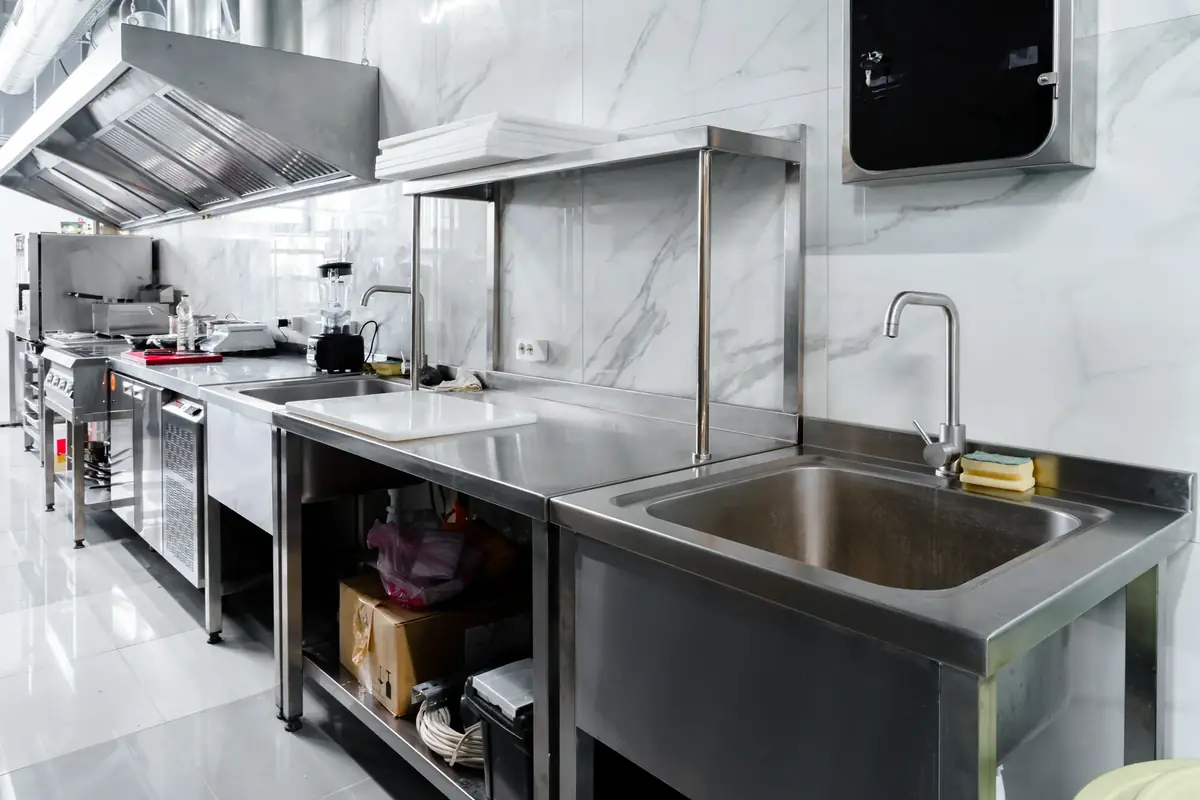
Urethane cement (sometimes called urethane concrete) is a cementitious-resin hybrid used in many food processing and commercial kitchen environments because of its tolerance to thermal shock, moisture and certain chemicals. It is typically applied thicker than coatings and has a more utilitarian appearance.
05Penetrating sealers and densifiers
Not every floor needs a film-forming coating. Densifiers and penetrating sealers harden and protect concrete without creating a coating layer on top. They do not provide the color, cleanability or stain protection of a resin system, but can suit some warehouse or polished concrete applications.
06How a system is selected
Selection weighs traffic type, impact, chemical and moisture exposure, cleaning methods, UV exposure, appearance, slip resistance, return-to-service time, slab condition and budget. Often the answer is a combination: for example, an epoxy base for build and bond with a polyurethane or polyaspartic topcoat for wear and UV stability.